David Jenkins
  • Home
  • Book Chapters
  • Articles
  • Misc. Publications
  • Books
  • Research Scales
  • Personal


​Come in; come in. The gods are here too.
                                                               --Aristotle, On the Parts of Animals
Picture
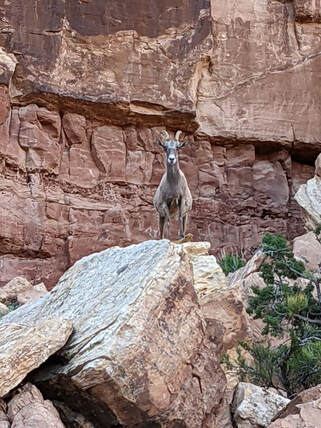
Bighorn sheep Ovis canadensis nelsoni
Picture
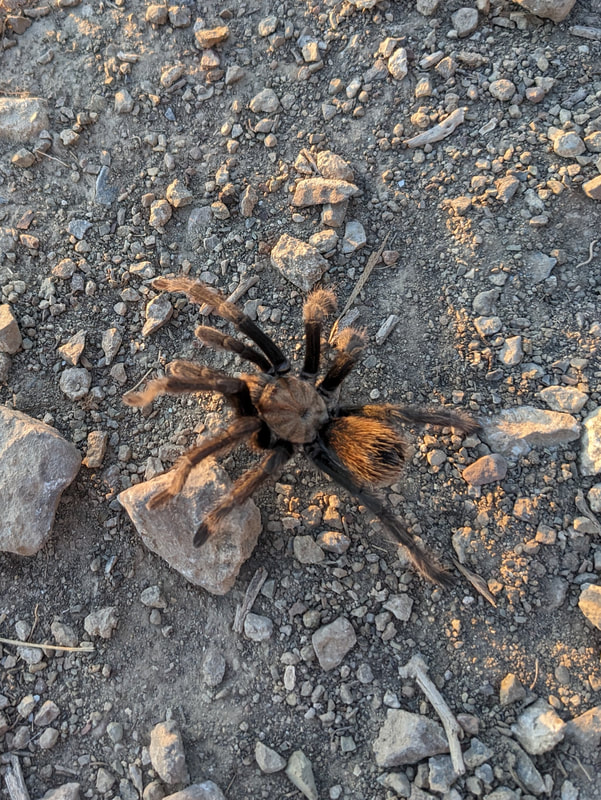
Tarantula Aphonopelma iodius
Picture
Rockfish Scorpaenidae


​​BOOKS


Picture


​
Available at Routledge
www.routledge.com/Nature-and-Bureaucracy-The-Wildness-of-Managed-L-and-scapes/Jenkins/p/book/9781032285627

​Also available at Amazon
www.amazon.com/Nature-Bureaucracy-Landscapes-Explorations-Environmental/dp/1032285672/ref=sr_1_1?crid=56CI26X53I5Y&keywords=nature+and+bureaucracy&qid=1657542253&s=books&sprefix=%2Cstripbooks%2C404&sr=1-1
​


Picture
Picture
The Run-Don't-Walk Press
Picture

Available on Amazon

https://www.amazon.com/dp/1521482039?ref_=pe_870760_150889320


​


Picture
Picture
The Run-Don't-Walk Press
2020
​Limited Edition


Picture


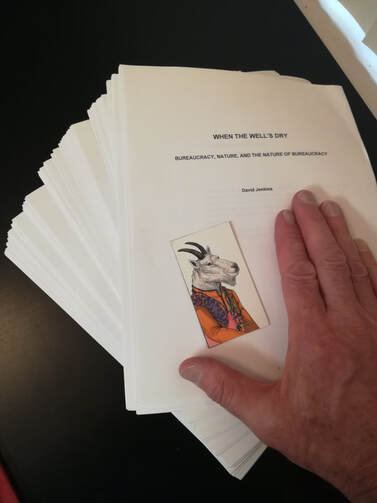
​When The Well Runs Dry:
Bureaucracy, Nature, and the Nature of Bureaucracy


The manuscript  is complete. Now to secure a publisher...

Routledge will publish this book in 2023, with a title change:

Nature and Bureaucracy


Books in Preparation


Chthonia: A Novel

Walking along the shore of Lake Michigan one cold January day, my eighteen-year-old daughter asked me if I thought the United States would last as a country.  My response was no, I thought not, civilizations, let alone countries, tend not to persist over long periods of time.  Her question led to a lively and wonderfully playful discussion about how humans would adapt after a global catastrophe.  Would we resort to hunting and gathering?  Agriculture?  Would small groups of humans cooperate or fight?  How would we reinvent the vast scientific knowledge lost with the collapse of all cultures? What new cultural forms would emerge?

Chthonia, now half-drafted at 70,000 words, is my attempt to answer those questions in a novel.
 
​

Customary and Traditional:
Essays on the History and Practice of Anthropology


Draws together some of my published papers with the addition of new essays on the history of applied anthropology in Alaska and on postmodern anthropology.

Acknowledgements
 
Preface
 
Chapter 1.  The State of Play
 
Chapter 2.  Museum Exhibitions and the Development of    American Anthropology
 
Chapter 3.  Ethnographic Photography
 
Chapter 4.  Anthropologists’ Autobiographies
 
Chapter 5.  Anthropology, Mathematics, and Kinship
 
Chapter 6.  Applied Anthropology: Customary and Traditional  Use among Alaska Natives
 
Chapter 7.  Are There Traditional Societies?
 
Bibliography
 
Index


Picture

​Spring
 
Our world’s solace
and silence, a red
finch at the feeder.
 
Forced to listen,
neighbor’s cat lies dormant,
death metal hiss.
 
Feathery flashes,
bluebells drip bees,
tail twitches.
 
Warm earth,
dust mites and strawberries,
tabby yawns.


Picture
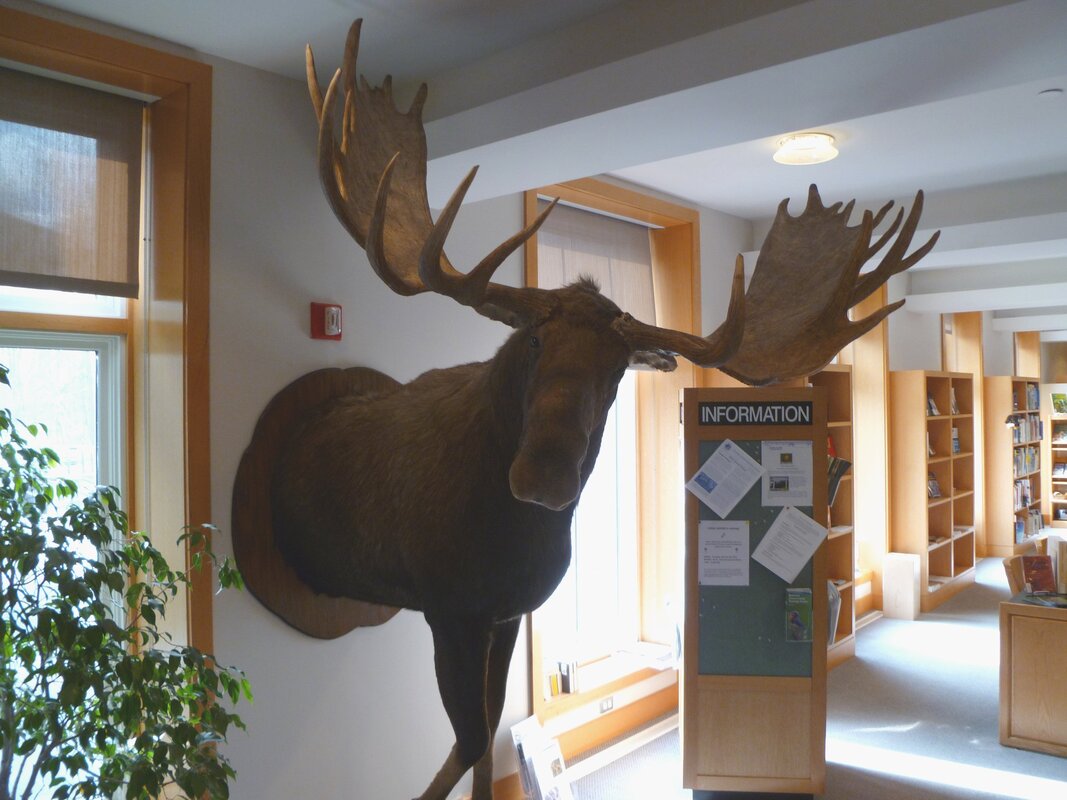
Why the Fish and Wildlife Service chose to have half a moose at the entrance to its library at the National Conservation Training Center remains a mystery.


Picture

  ​ Preface to "Customary and Traditional" copyright 2017 David Jenkins

  In the following essays I aspire to historicize anthropology, but not exclusively. Narrative histories, like ethnographies, are necessarily selective in marshaling facts and limited in adopting a particular interpretive approach.  The essay form, however, allows a kind of interpretive flexibility not often possible in narrative histories or ethnographies.  Each essay allows a different take, a novel interpretation.  At the expense of depth, the essay may be well-suited to the history of anthropology, which, especially in recent decades, has been both episodic and without obvious coherence—evincing a kind of punctuated equilibrium with theoretical interruptions more frequent than historical continuity.  The reader of the following essays, on museums, photography, autobiography, mathematics and kinship, applied anthropology, and traditional societies, may discover the absence of disciplinary coherence reflected in the topics.  Or—and this is my point of view—the reader may recognize that anthropology encompasses all of humanity and all of its manifold expressions, past and present; a unified history of a field that studies all of humanity is unlikely. Perhaps it is best not to think of anthropology as a field of study with a core of commonly held ideas similar to biology or astrophysics, but rather as a broad intellectual orientation within which exist fields of study, each of which may contain core ideas or, increasingly, may not. 

    I am not referring to the American emphasis on four anthropological subfields, with its origins in late-nineteenth century Boasian thought: archaeology, linguistics, cultural anthropology, and biological anthropology.  Although most contemporary American anthropologists stay firmly entrenched in one or another subfield, a determined minority sees its job as crossing subfields in an attempt to better model and understand human behavior.  For this group the issue is to recognize humans as animals subject to evolutionary processes and constraints and also as culture bearers who can in some ways stand outside of and influence those processes and constraints. For this group subfields may impede advancements in knowledge, contrary to the original Boasian impulse to keep them, like a holy quarterny, separate but united.

   Dietrich Stout’s intriguing brain-imaging research on stone toolmaking suggests evolutionary relationships between hand skills, language, and the human tendency to instruct one another.  Based on fluorodeoxyglucose positron-emission tomography imaging, Stout and his colleagues show that brain activity differs between skilled and naïve stone toolmakers and between making simple stone tools and complex handaxes.  The brain patterns “suggest that toolmaking and language share a basis in more general human capacities for complex goal-directed action.”  These general capacities are “consistent with coevolutionary hypotheses linking the emergence of language, toolmaking, population-level functional lateralization and association cortex expansion in human evolution.” [1] To understand the evolution and expression of these capacities requires the concerted effort of archaeologists, linguists, biological anthropologists, and cultural anthropologists.

   Countering this position is the assertion that human culture preceded anatomically modern Homo sapiens, that culture did not emerge from natural selection as some sort of aftermarket appendage, or as a coevolved component, but was the central selective factor in the evolution of humans.  Marshall Sahlins notes that

  • "The great selective pressure in hominid evolution has been the necessity to organize somatic dispositions by symbolic means.  It is not that Homo sapiens is without bodily “needs” and “drives,” but the critical discovery of anthropology has been that human needs and drives are indeterminate as regards their object because bodily satisfactions are specified in and through symbolic values—and variously so in different cultural-symbolic schemes."[2]

    Once symbolic values came on the scene humans organized their experience in terms of them, including the knapping of stones.   In this view, it may be misleading to think of humans as biological organisms without taking into account their own account of themselves, that is, their cultures.  This is why, for example, studies of kin selection and the evolution of altruism, based on W. D. Hamilton's pioneering work, may fail to illuminate specifically human characteristics of kinship.[3]  The universe of cultural meaning is integral to those characteristics, and cannot be placed aside or dismissed out of theoretical convenience.

    Sahlins’s position will eventually be reconciled with an evolutionary paradigm, although he himself may find any reconciliation one of expediency rather than substance (see, for example, his Use and Abuse of Biology [1976], and What Kinship Is…And Is Not [2013]).  Nonetheless, it is true that humans have spent most of their evolutionary history as hunter-gatherers, living in small kin-based groups and exchanging mates with other, similar kin-based groups.  In this context, bodily satisfactions may have been mediated by symbolic values, or it may have been the other way around, and behavior and emotional/cognitive states initially generated symbolic values. We know, however, very little about such values deep in human prehistory, about how and when they emerged, and with what effect. 

   What we do know comes by way of archaeology, historical linguistics, comparative ethnology, genetics, and cognitive psychology, which are further informed by recent advances in comparative primatology. The point is that the subfields, like anthropology generally, may have reached the end of their usefulness.  New insights come not from staying within one or the other subfield but by reorganizing the objects of inquiry into an integrated research approach which explicitly crosses and links them.

    Studies of brain plasticity may provide one avenue for integration.  These studies indicate that cognitive training—in music, reading, and spatial orientation, for example—leads to physical, organizational changes to the brain.  John Allen argues that “the unique, intensive types of training required in learning specialized, complex skills are quite different from that which might be expected in a ‘normal’ developmental environment.”  He goes on to observe that “the ability to teach and learn these sorts of tasks—in some cases requiring training over years—may be uniquely human, occurring only in a linguistically mediated environment.”[4] 

    It is in such studies that Sahlins’ position can be given evolutionary grounding.  Allen suggests that “plasticity studies give us insights into how the hominid cultural environment has a direct influence on brain anatomy.”  He goes on to say,

  • "As early Homo spread into diverse ecological environments, the behavioral plasticity of our genus was no doubt a significant factor in surviving in these new settings (Wells and Stock 2007).  This behavioral plasticity must have been expressed in a cultural context, thus establishing the human selective environment as one defined by both ecological and cultural factors.  We see from the [brain] plasticity studies that the intensity of cultural training is sufficient to alter the normative morphology of the human brain.  I suggest that any cultural environment capable of modifying the brain’s morphology in a developmental sense is also a potentially powerful selective environment, capable of modifying the brain’s morphology over the course of generations."[5]
​
    Of course, the four Boasian subfields have had long-lasting historical consequences, one of which was to separate scholarly efforts rather than integrating them, but could have been otherwise.  The contingencies of the past were many, and may well have led to other contemporary intellectual skirmishes.  John Wesley Powell, for example, did not become a founder of American anthropology, which honor was placed upon Boas.  But Powell and the Bureau of Ethnology he headed were nevertheless central to the origins of American anthropology.[6]  Boas was enshrined to be forgotten by modern anthropologists; Powell was simply forgotten by them.  In The Rise of Anthropological Theory, Marvin Harris passes off Powell in half a paragraph, calling him “another influential but distressingly undisciplined dabbler in anthropological evolutionism.”  In A Century of Controversy, Elman Service mentions Powell once in passing.[7]

   Sounding surprisingly modern (and surprisingly Boasian), Powell argued that it was impossible to classify humans into groups because of historical contingency and consequently any arrangements of American Indians into “tribes” were arbitrary.  Choosing a point in time to classify tribal groups ignored processes of change and imposed a cultural stability that was not supported by the historical record.  This was not a repudiation of the science of anthropology; it was a recognition that anthropology was founded on “subsidiary sciences” and not on any presumed cultural or tribal coherence.  I cite these sciences later, but they are worth emphasizing here.  For Powell, anthropology depended upon biology, psychology, technology (“all the arts of mankind”), sociology (“all the institutions of mankind’), philology (“all the languages of mankind”), and philosophy (“all the opinions of mankind”).  His overarching science attempted to link these subsidiary sciences, all ultimately couched in terms of the evolution of humanity. Powell worked in government.  Had he taught at a university and left a legacy of students, we may celebrate him as a founder on par with Boas.  We may have had a “sacred bundle” not of four but of six subfields constitutive of anthropology.  But we do not, and Powell’s understanding of cultural evolution that supported his science, however undisciplined, has disappeared.

    Modern attempts to cross and link Boasian subfields may result in new discoveries.[8] Perhaps studies of the evolution of the brain will continue to provide the integrative context. I should emphasize, however, that for an equally determined segment of the anthropological community, the issue is to remain firmly in the cultural studies camp, not so much as prehistoric hunters and gatherers discovering fire and learning to cook, but as posthistoric deconstructers of ideology, values, and relations of power, and finding sustenance in what remains.  Postmodern anthropologists remain encamped, sitting around the fire and trading stories among themselves as anthropologists do.  It’s all a question of who is looking at whom based on the exotic system of scholarly classification in question.  And in which professional journal.  I retain the strong sense that those who read Richard Wrangham’s Catching Fire: How Cooking Made Us Human (2009) are not those who read Donna Haraway’s Primate Visions: Gender, Race, and Nature in the World of Modern Science (1989). The camps remain far apart, the systems of scholarly classification incompatible.  For my part, if I had to choose, I’d rather know how to cook than to deconstruct a meal, but knowing both is a fine thing.  As one scholar noted about the shift away from structuralist thought in the late twentieth century to a more free-wheeling deconstructive style, “poststructuralism is like taking a postprandial walk.” One can’t always be eating, but tomorrow it will necessary to do so again.[9] 

   These sorts of weighty issues are at once too awkward and outside the concerns of my rather modest attempts at understanding the history of anthropology.  Such issues await others to write their histories.  And I see I am slipping into current anthropological debates rather than anthropological history.  But the debates are the product of that history, and could be otherwise, as the following essays attempt to show. 


[1] Dietrich Stout, “Skill and cognition in stone tool production: an ethnographic case study from Irian Jaya.” Current Anthropology 45 (2002); Dietrich Stout and T. Chaminade, “The evolutionary neuroscience of tool making.” Neuropsychologia 45 (2007); the quotations are from Dietrich Stout, et al. “Neural correlates of Early Stone Age toolmaking: technology, language and cognition in human evolution,” Philosophical Transactions of the Royal Society B 363 (2008), 1939. 
 
[2] Marshall Sahlins, “The Sadness of Sweetness,” in Culture in Practice: Selected Essays.  (New York: Zone Books, 2000), 546.  Originally published in Current Anthropology 37 (June 1996).
 
[3] W. D. Hamilton, “The evolution of altruistic behavior.”  American Naturalist 97 (1963):354-56; “The Genetical Evolution of Social Behavior,” Journal of Theoretical Biology 7 (1964): 1-16.  See also Narrow roads to gene land: The collected papers of W.D. Hamilton (Oxford: W.H. Freeman, 1996).   For a recent assessment, see Robin Dunbar, “Kinship in Biological Perspective,” in Nicholas J. Allen, Hilary Callan, Robin Dunbar and Wendy James, eds. Early Human Kinship: From Sex to Social Reproduction (Oxford: Blackwell, 2008) pp. 131-150. Cf. Claude Lévi-Strauss, The View From Afar, trans. Joachim Neugroschel and Pheobe Hoss (New York: Basic Books, 1985), chap. 2.
 
[4] John S. Allen, The Lives of the Brain: Human Evolution and the Organ of Mind (Cambridge: Harvard University Press, 2009), 145-46.
 
[5]Allen, The Lives of the Brain, 146-47.
 
[6] See Wallace Stegner, Beyond the Hundredth Meridian: John Wesley Powell and the Second Opening of the West (Boston: Houghton Mifflen, 1953); Donald Worster,  A River Running West: The Life of John Wesley Powell (Oxford: Oxford University Press, 2000).
 
[7] Marvin Harris, The Rise of Anthropological Theory: A History of Theories of Culture (New York: Thomas Y. Crowell, 1968); Elman R. Service, A Century of Controversy: Ethnological Issues from 1860 to 1960 (New York: Academic Press, 1985).
 
[8] I have in mind such work as Patrick V. Kirch and Roger C. Green, Hawaiki, Ancestral Polynesia: An Essay in Historical Anthropology (Cambridge: Cambridge University Press, 2001), Bernard Chapais, Primeval Kinship: How Pair-Bonding Gave Birth to Human Society (Cambridge: Harvard University Press, 2008), and much of Robin Fox’s work, e.g. The Red Lamp of Incest: An Enquiry into the Origin of Mind and Society (New York: E.P. Dutton, 1980), The Search for Society: Quest for a Biosocial Science and Morality (New Brunswick NJ: Rutgers University Press, 1989), The Challenge of Anthropology: Old Encounters and New Excursions (New Brunswick NJ: Transaction Press, 1994), and The Tribal Imagination: Civilization and the Savage Mind (Cambridge: Harvard University Press, 2011).
 
[9] I can’t for the life of me find the reference to this analogy.  I apologize to the scholar whose phrase I recall, but little else, frailty of memory being what it is.


Picture

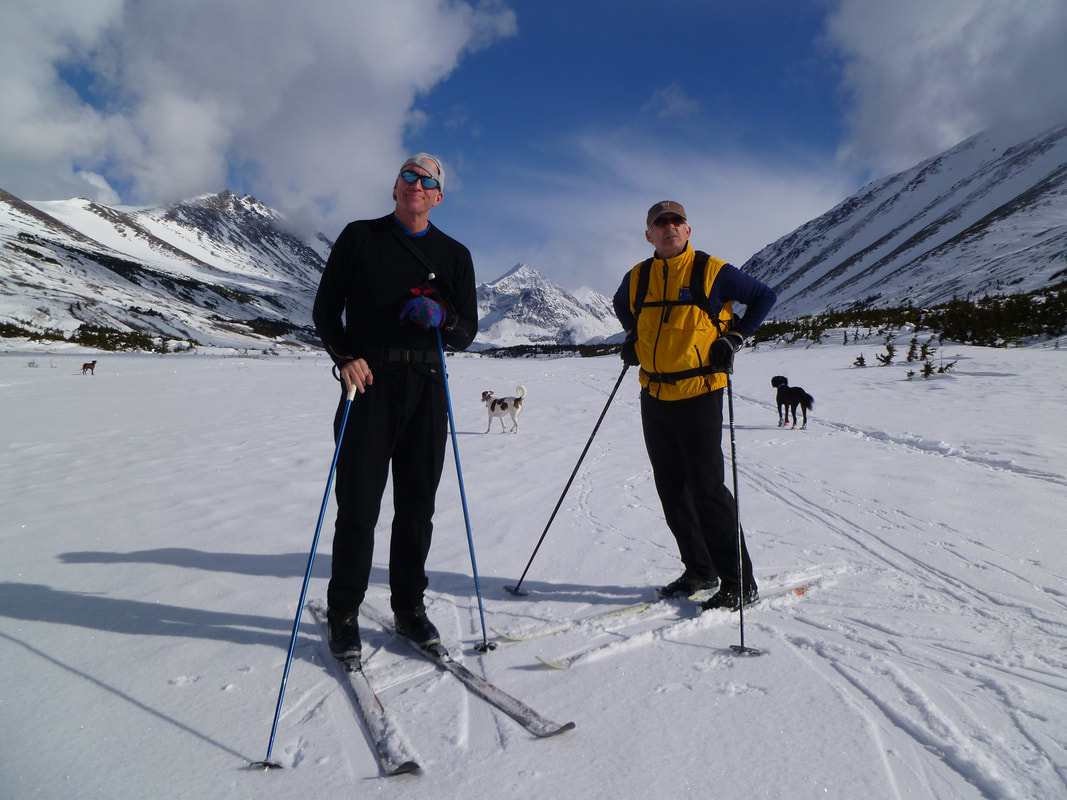
Three dogs, two men. In the Chugach Mountains above Anchorage one fine spring day.

​This is the introduction to a book I've been working on in fits and starts for several years.


Long Distance Travel in the Ancient Americas
  copyright 2017 David Jenkins
 
I am on a bicycle.  It is a Peugeot PX10 built from Reynolds 531 double-butted tubing.  I am from Utah, my bicycle is from France, and I am riding down a long, winding road in Guatemala.  The year is 1976.  I am in motion, my bike is in motion, Guatemala, just before a horrific earthquake that knocked around its capital city, seems timeless. That, of course, is illusion.  I am nineteen, and over the preceding months I have ridden through most of Mexico, and before that Arizona.  We started, my friend and I, from Mexican Hat, Utah, and rode south, and intend to ride as far as we can, until our energy and our money are depleted.  We have an abundance of one, and a paucity of the other.   We are incredibly happy.  We ride bikes rather than attend college.  We have both dropped out, to the dismay of our parents but to our own good fortune.  We are enthralled and exuberant to be riding through Central America, not knowing what lies ahead, but eager to find out. Mexico is behind us, El Salvador, Honduras, Nicaragua, Costa Rica, and Panama are in front of us, and beyond that, all of South America.  But at the moment we are coasting down a narrow road dense with colorfully dressed local folk, some quite drunk, walking home from a celebration.  We wave and say hola and continue on our way, the road edged with dark vegetation, the air humid, and, as happens every day, I am forced to stop with yet another flat tire. Kids gather around as I quickly make my repairs, and I'm back on my bike and on my way.  The world is in motion, I am in motion, my bike is beneath me, humming along...

Forty years later, I am still eager, still exuberant, still wondering what lies around the next bend, and always happy to be surprised by what I find.  Here is some of what I've found along the way.

 
Preface
 
Sit for a week or two in a café in Buenos Aires, Los Angeles, New York City, Québec, or Mexico City, and you will see people who come from elsewhere, who speak as their native language any one of several dozen different languages.  You may hear Tagalog, Chinese, Quechua, Estonian, Alur, French, Hebrew, Guaraní, Swahili, Arabic, or Navajo.  A careful listener with a linguistic bent and a map of the world could make a small catalogue of human movement across the planet, simply by recording the different languages he or she encounters in one café.  This language is from the Philippines, that one from Nepal.  Another language is native to New Guinea; yet another comes from the central Amazon.  Other languages you may hear hail from Ghana, Russia, Morocco, or Ireland.  Still others, our amateur linguist thinks, are harder to place but are clearly from far away.

A similar catalogue of the movement of goods can be made from the same café. You sit, in this trendy shop, on a leather stool with stainless steel legs made out of a cow hide from Argentina, stainless steel from Russia and foam padding from China. Your coffee in its little paper cup comes from Colombia, Guatemala, or Ethiopia, or another country with a warm, wet climate.  The 2 percent organic milk you prefer comes from a closer source, but still a hundred or more miles from where you sit.  Sugar cane for the raw brown sugar you like was grown in Hawaii. You sit and watch the people who come from afar and drink coffee from Ethiopia mixed with sugar from Hawaii and cow’s milk from the next state over.  The cup which holds your favorite brew was manufactured from a tree grown in Canada.  You sip and hold the world system steaming in your hands. Globalization swirls in a coffee cup. World music, which has become a staple in the modern coffee shop, mimics the goods that are all around. African rhythms, Celtic harps, Spanish guitars, and New Orleans jazz fit right in.  The energy to move these diverse goods and people from place to place comes, as likely as not, from Saudi Arabian oil.  In this small café, you hear the world, hold the world, sit on the world, drink the world.  Very little comes from nearby.

Globalization is marked by the massive movement of information, people, goods, plants and animals across the planet.  The process is not new but at least half a millennium old.  In the fifteenth century, European expansion began to bind the planet into a single human-dominated system, with all of its attendant ills, and its achievements too.  The modern results and the establishment of capitalism as a dominant economic system have become part of a long and varied history.  Or rather part of many long and varied histories, since the diverse cultures Europeans encountered had, and continue to have, their own perspectives on the process.  It has become commonplace to observe that the world has gotten smaller, that economic and communication ties transcend local and national boundaries.  But this does not mean that the globalized dominant economic system has supplanted everything else, nor that this system will somehow continue indefinitely.  Nor does it mean, as many commentators insist, that cultural diversity has been inevitably lessened, that everyone everywhere has become a westernized capitalist, or is quickly becoming one. 

When Europeans began expanding five hundred years ago they encountered cultures with established networks of trade, which already moved goods and people great distances.  Trade across large distances was not a European invention.  At the time, few if any people were entirely isolated, even if their spheres of influence and exchange were smaller than those of the expanding Europeans. The Inka in the central Andes developed an efficient road network that stretched the length of South America and allowed for the rapid movement of people and goods throughout their empire. Polynesians had perfected the ocean-going canoe and traveled on trade expeditions across hundreds of miles of open ocean, linking distant islands in vast networks of exchange. Inuit regularly traveled by dog sled over many hundreds of miles on hunting expeditions, visiting relatives, or simply exploring their environment. Indians in North America had trade networks that encompassed thousands of square miles, long before the widespread adoption of the horse.  Mongols traveled throughout central Asia, fighting with and usually conquering their neighbors.  For many of these and other peoples, it was commonplace to travel for months, sometimes years at a time, leaving the comforts of home for other distant places. 

Distance is of course relative.  It depends upon purpose, geography, technology and concepts of time.  Political control may also be an important factor.  A four hundred mile open-ocean trip by canoe in Micronesian waters is in some ways shorter than a four hundred mile trek by dogsled across the high arctic.  A walking pilgrimage to visit a sacred shrine three hundred miles away in the Himalayas is a different experience from a three hundred mile desert trip by camel to trade for exotic supplies.  Travel down a long stretch of the Amazon River clearly requires a different understanding of the natural world than an equivalent distance along the coast of New Guinea.

This book is about systems of long distance trade that did not encompass the entire planet, but nevertheless covered large regions, sometimes surprisingly large regions.  It seeks to describe not what happened to local cultures and environments with European expansion, but rather to tell the stories of what was already in place.  Networks of trade that predate European expansion had profound ecological effects, just as they had profound cultural effects.  People moved along such networks, trading goods and animals, exchanging spouses, mixing languages, fighting, and adopting each other’s inventions.  And when Europeans arrived they had to make use, as best they could, of established networks for their own purposes.  Any adequate account of modern globalization needs to incorporate an understanding of what went before, of the kinds of regional systems that were, in their own ways, dominant systems.

The geographic focus on the Americas is dictated in part by my own scholarly background and in part by the practical need to limit the scope of inquiry.  A number of excellent overviews cover other parts of the world.  These include, among others, Patrick V. Kirch’s two volumes on Oceania, The Lapita Peoples (1997) and On the Road of the Winds (2000), which detail the extraordinary expansion of Austronesian-speakers into remote Pacific islands; David W. Anthony’s The Horse, The Wheel, and Language (2008), which describes the origins and spread of Proto-Indo-European speakers from the central steppes of Eurasia across Europe and Asia, and whose daughter languages are now spoken by half the world’s population;  Steven Mithin’s After The Ice: A Global Human History (2003), which describes human migration and settlement after the last Ice Age; Peter Bellwood’s First Farmers: The Origins of Agricultural Societies (2005), which shows how initial inventions of agriculture in different parts of the world resulted in human population expansions and dispersals; and Jared Diamond’s two books, Guns, Germs, and Steel: The Fate of Human Societies (1997) and Collapse: How Societies Choose to Fail or Succeed (2005), both of which provide detailed examples of the ecological consequences of human activities.

As in other parts of the planet, humans in the Americas developed networks of exchange and trade that formed, evolved, and dissolved.  Their worlds were not static.  Stability, when it occurred, was fleeting.  At times people acted in concert with the environments that supported them, living in what we would now call a reasonably sustainable fashion; and at times they behaved in ways that substantially altered ecosystems, leading to the demise of their own societies.  But rarely were they entirely isolated, unaffected by other groups of people, and rarely were they entirely unknowledgeable of other places.  Humans interacted with other humans, often covered great distances to do so, and developed regional systems as a result.  These systems are mostly gone, with only traces remaining.  But as I try to show here, they are still deeply interesting both as part of the human past and as part of the history of the environments humans modified for their own purposes.

It is difficult to imagine that the modern world system will persist indefinitely, that everything in a small café in New York or Seattle or Caracas will always come from far away.  If the global system eventually falls apart from its own contradictions, what remains may be smaller, regionally focused systems of the sort humans developed in the past.  Perhaps any collapse of the world system could be at least partly averted with an improved understanding of—indeed a substantial return to—regional systems.  Those who advocate the development of regionally focused agricultural economies are keenly aware that the world-wide distribution of agricultural products is deeply irrational and may lead to catastrophe.  But, as Jared Diamond has recently shown, local systems too are prone to collapse, when the people involved in them ignore signs of environmental stress and place their own short-range cultural and economic concerns over the long-range health of the environment that sustains them.

​My own interest in the topic of long distance travel and trade began more than forty years ago.  As a nineteen-year-old I bicycled with a friend from Mexican Hat, Utah, south through Arizona and most of Mexico and Central America, and then on through parts of Colombia and Ecuador.  A bicycle is a marvelous device to come to terms with the scale of the earth.  The pace is slow, the technology simple. Such travel immerses you in local environments, both natural and human, and forces you to confront on a daily basis ecological and cultural change.  My friend later became an expert on animal locomotion, and has spent his life analyzing the evolution and function of various locomotor systems.  My own interests were captured by human movements, with how and why people travel across great distances and thereby link diverse ecosystems and populations into regional systems of trade and exchange.  What follows is a kind of triptych of my explorations into those systems begun, by bicycle, so long ago.

Picture
When the Shark Bites. Coastal Maine.

Picture
Near Yellowcat, Utah, searching for fossils


Picture
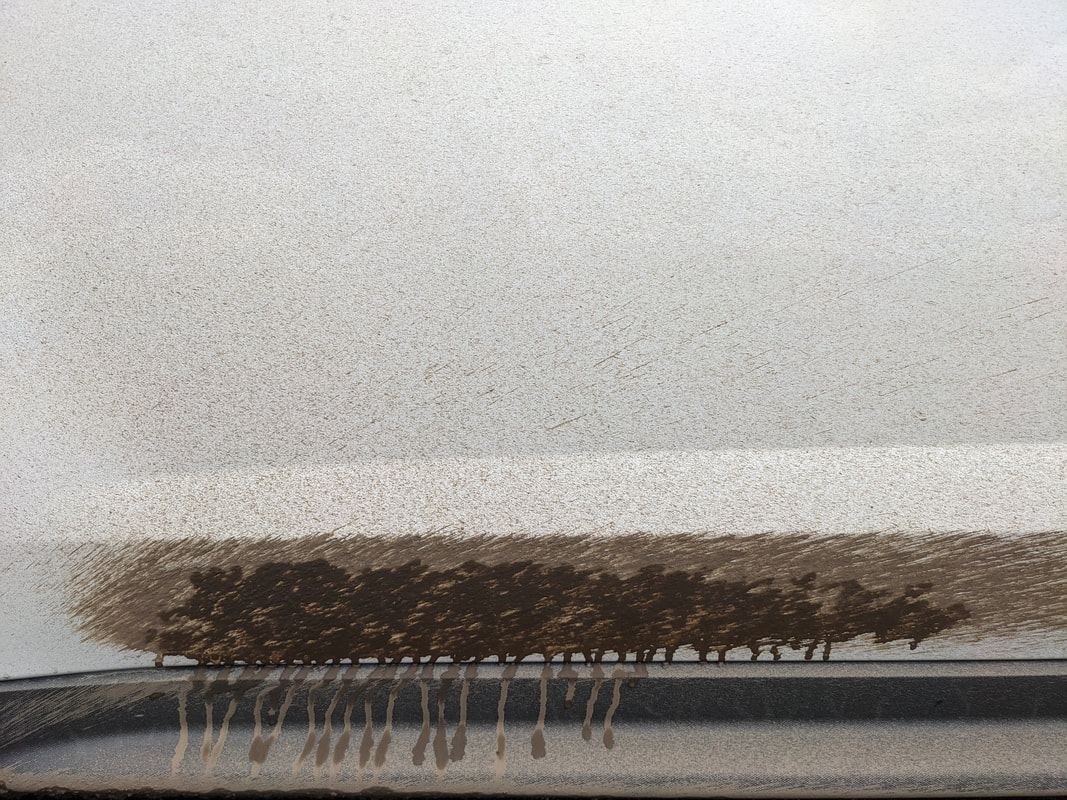
Caterpillar. Mud on metal.

Picture
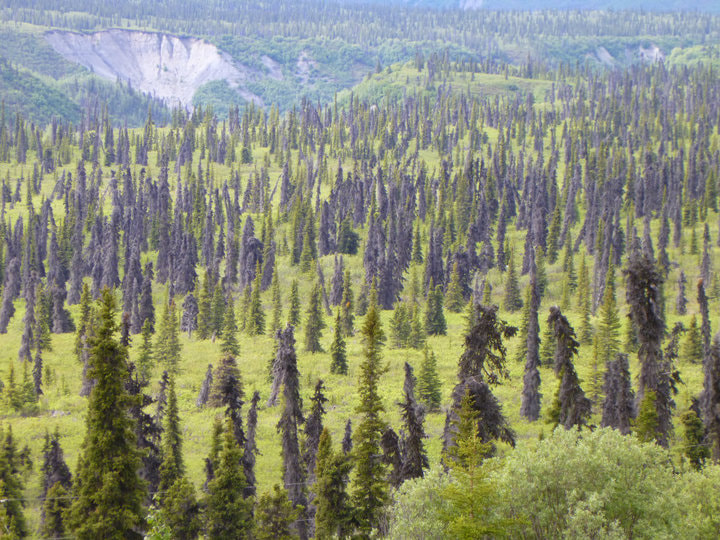
Pines as painting
Powered by Create your own unique website with customizable templates.
  • Home
  • Book Chapters
  • Articles
  • Misc. Publications
  • Books
  • Research Scales
  • Personal